notes
The Daily Note Habit: One Page a Day for Everything in Your Head
The gist: A daily note — one page per day, titled with today’s date — removes the one real obstacle to writing things down: deciding where they go. Everything lands in the same place; a weekly pass promotes what matters into permanent notes or tasks, and the rest is allowed to disappear.
Every note system you’ve abandoned probably died at the same decision point: where does this go? A meeting fragment, a stray idea, a link for later — each one asks you to classify it before you’re allowed to write it down. That half-second of deciding is enough friction to make you not bother.
A daily note removes the decision entirely. There’s one destination: today. No project, no folder, no plan for how the thought fits anywhere — just today’s date, which already exists.
Two things make this effective, not just convenient:
There’s no setup to procrastinate over. Open Notly and today’s note is already there, titled with the date — no template, no folder to name first. That’s the whole onboarding. The only decision left is the smallest one: write a line, right now, about whatever’s in front of you. The habit is built by repetition, not by getting the system right on day one.
Anything that would otherwise float around in your head or on a sticky note. Most daily notes fill up with the same handful of things:
None of it needs a heading, a tag, or an order. That’s deliberate — see the mistakes below.
A daily note only works long-term if you occasionally empty it of what matters. Once a week, read back through the last few days for the handful of entries with staying power. Most of what you wrote already served its purpose — it got the thought out of your head, and that’s the end of its job.
For what’s left:
This is promotion, not filing. You’re rescuing the small percentage that earned a permanent home — in Notly, a linked task or a topic note sitting right alongside it.
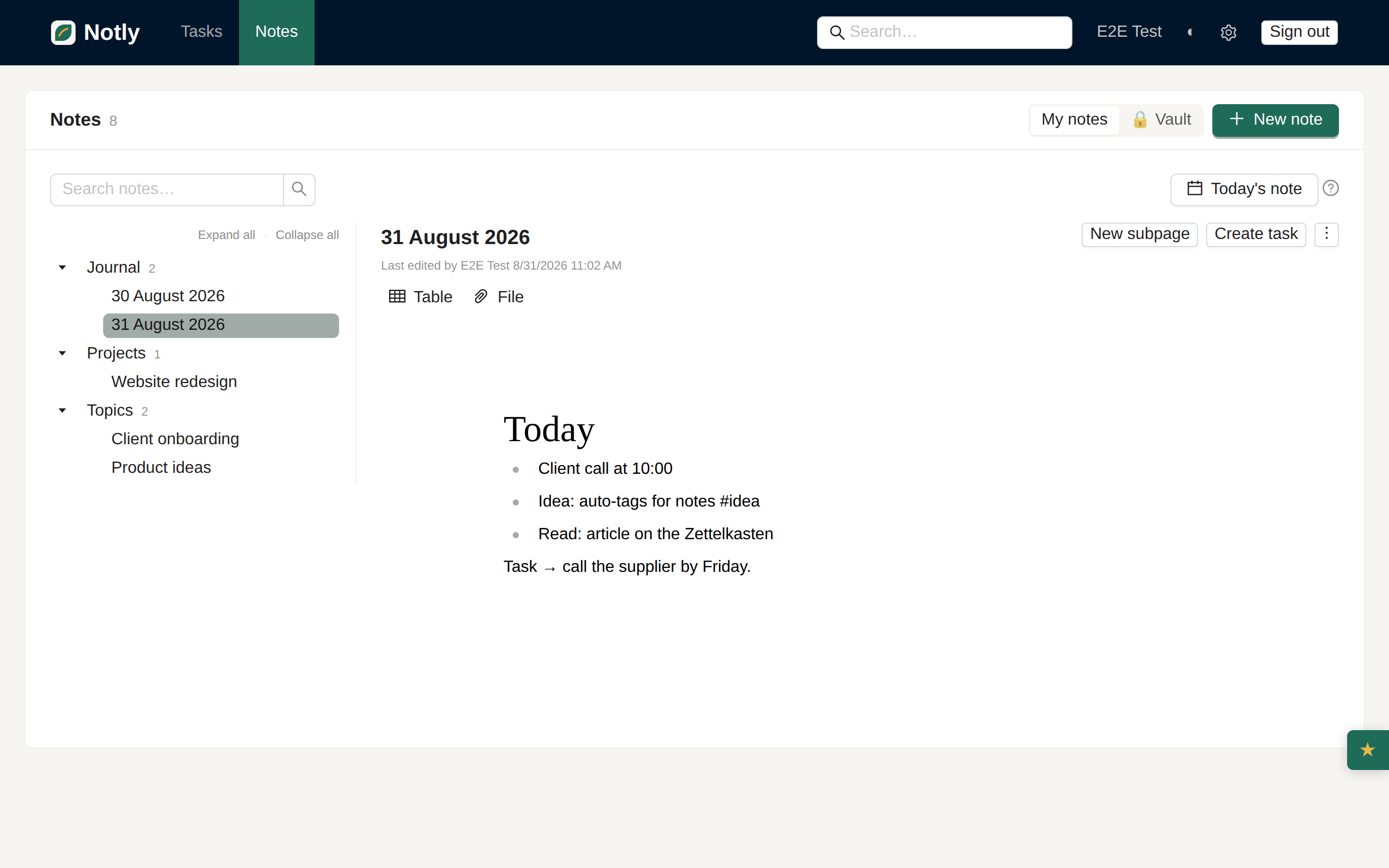
A fairly ordinary Tuesday:
Nothing here is polished. That’s the point — it took under a minute, and every line is something the week-later version of you will be glad exists.
In Notly, the daily note opens automatically, and a plain-text mention of a task code turns into a link on its own — so the harvest step is often just noticing what you already wrote.
A daily note works because it removes the one decision that kills capture: where does this go. Open it, write the fragment, move on — the generation effect does its part just from the writing, and the Zeigarnik itch quiets once the thought is out. Once a week, mine the entries with real staying power into a topic note or a task with a deadline, and let the rest go. For more on where that promoted content should live, see how to organize your notes.