tasks
Note or Task? A Simple Rule for Every Stray Thought
You’ve just remembered something. Maybe it’s “call the dentist,” maybe it’s “the client’s API key expires in October,” maybe it’s a half-formed idea for a side project. Where does it go? Get this decision wrong often enough and one of two things happens: your task list fills up with reference material you never “complete,” or your notes quietly bury things that actually needed a deadline.
The good news is that the decision is almost always faster than it feels.
Read the thought back to yourself. Does it start with a verb — an action you (or someone else) needs to do?
If yes, it’s a task. Give it a due date, even a rough one, and put it where it can nag you. A task without a date isn’t really a task yet — it’s a note wearing a task’s clothes, and it will sit there uncompleted forever because nothing forces it to surface.
If the thought is a fact, a reference, or an idea — something you’d want to find later rather than finish — it’s a note:
A task is something you finish. A note is something you keep.
That’s really the whole rule. The reason it works is that tasks and notes have opposite success conditions: a task succeeds when it disappears (you did the thing, you check it off), and a note succeeds when it’s still there next year, waiting to be found.
Some thoughts sit right on the line — “look into switching invoicing tools” is neither a five-minute action nor pure reference material. For those, default to writing a note, not a task.
Here’s why that direction matters more than the other one. A task list cluttered with vague, undated “maybe someday” items becomes something you stop trusting — and once you stop trusting your task list, you stop checking it, which defeats the entire point of keeping one. A note, on the other hand, costs you nothing sitting there unfinished. It’s just information, waiting.
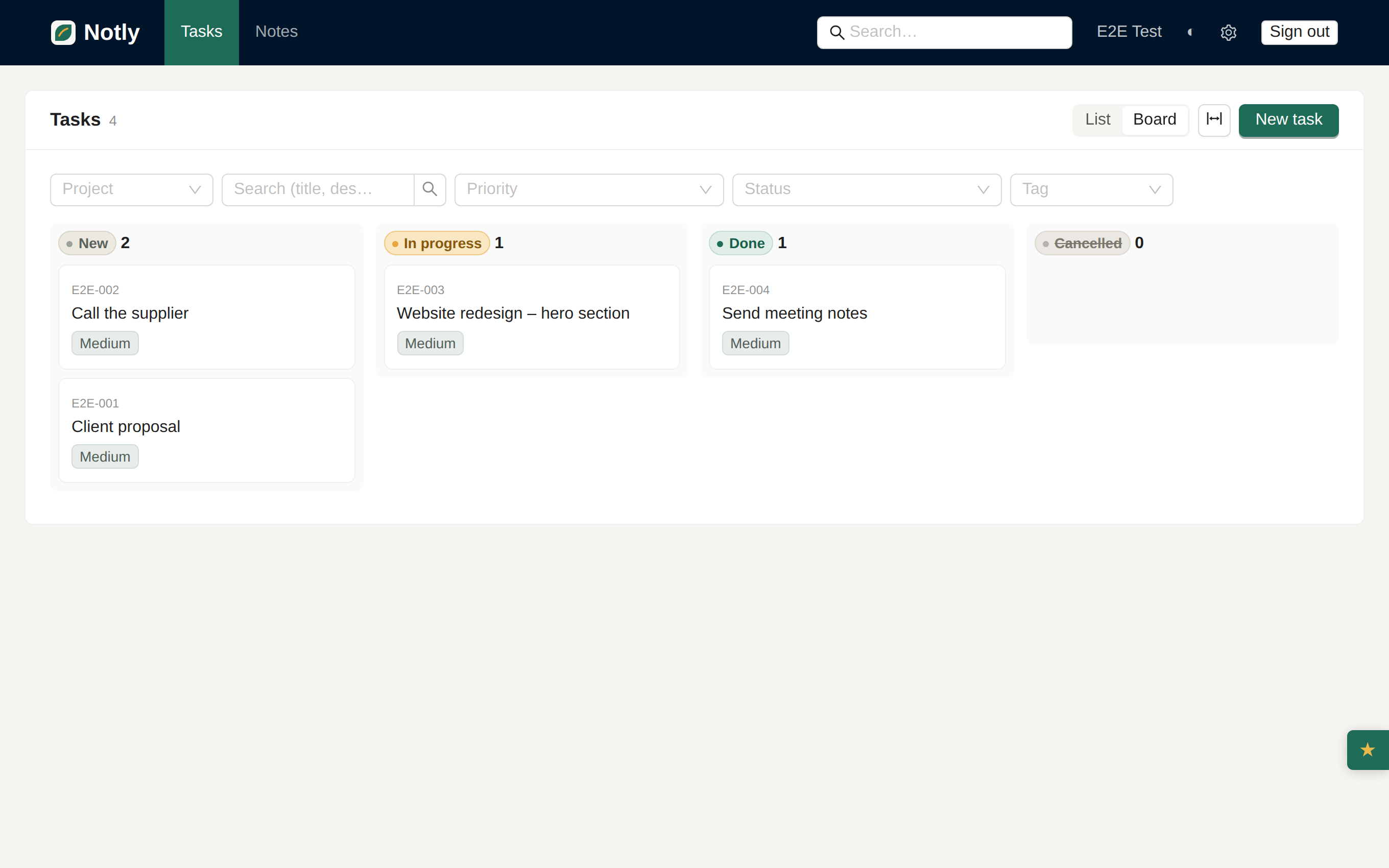
The moment a vague note turns concrete — you decide which invoicing tool, and when you’ll switch — that’s your cue to promote it. In Notly this is one click: turn a note into a task, add the due date now that you actually have one, and the vague idea becomes a real commitment. Nothing is lost in the meantime; a note mentioning a task’s code even links back to it automatically, so the trail from “vague thought” to “finished thing” stays visible.
A practical way to think about it day to day:
The rule costs about two seconds per thought, and it keeps both lists honest: your tasks stay a short, trustworthy list of things you’ll actually do, and your notes stay a calm place for everything else.